
This teardown examines a structural gap between two sides of the same funnel at Power Home Remodeling. A gap visible from public data, that reveals something most contractors running Google Ads have never been told directly. Power HRG's marketing decisions are fine. The gap is the subject.
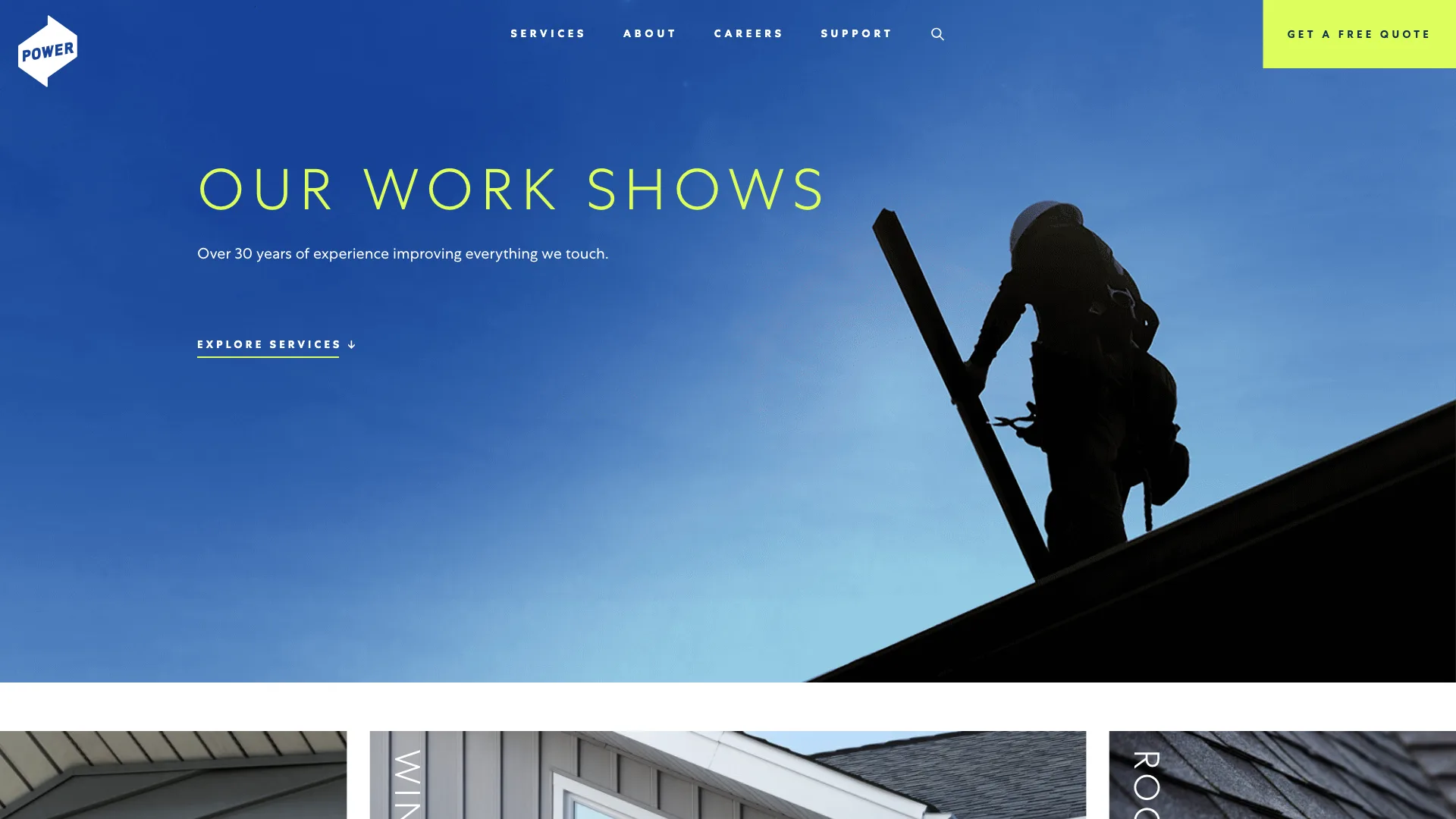
The brand runs roughly 400 active Google Ads across two accounts, documented in the Google Ads Transparency Center. The creative is brand-consistent and sharp. "Exteriors Made Epic." "Tear the Roof Off Your Expectations." "Home Run." The homepage scores 79 out of 100 on the Fervor Grade. Thirty years of operations. 500,000+ completed projects. A 4.6-star aggregate rating.
And at the same time, around 2,800 homeowners per month read Power HRG blog content, finish the article, and leave without being asked for their contact information. The content is fine. The measurement infrastructure that would make someone care about fixing it doesn't exist on the organic side.
That gap is the subject of this audit.
Spending
"In 2024, 22% of renovating homeowners undertook roofing upgrades, with a median spend of $13,000."
— Houzz Inc. (2025)
What Power Home Remodeling's Google Ads investment reveals about brand priorities
Running 400 simultaneous Google Ads isn't a default setting. It requires campaign architecture, creative production, bid management, and ongoing performance analysis. Someone at Power HRG, or an agency working on their behalf, is actively optimizing based on cost-per-acquisition data. And that's not infrastructure you build by accident.
The ad creative itself demonstrates real conversion thinking. "Tear the Roof Off Your Expectations" is a roofing pun that's also genuinely motivating. "Home Run" lands as a springtime exterior-project prompt. "Exteriors Made Epic" functions as both a brand promise and a homeowner aspiration. These aren't placeholder headlines. Someone ran tests.
Understanding Power HRG's full marketing strategy requires reading the paid side and the organic side separately, because the investment logic driving each one isn't the same. Paid acquisition is measured in CPA. Organic content is measured in page views. So the divergence in what gets measured is what explains the divergence in what gets fixed.
And the lesson for any local exterior contractor reading this: the paid strategy at Power HRG represents more deliberate conversion thinking than most regional contractors apply to their entire website in a given year. That's context, not criticism. National brands invest in paid acquisition because paid acquisition is measurable. You know what you spent. You know what came back. That clarity creates accountability.
The organic gap in Power Home Remodeling's content strategy
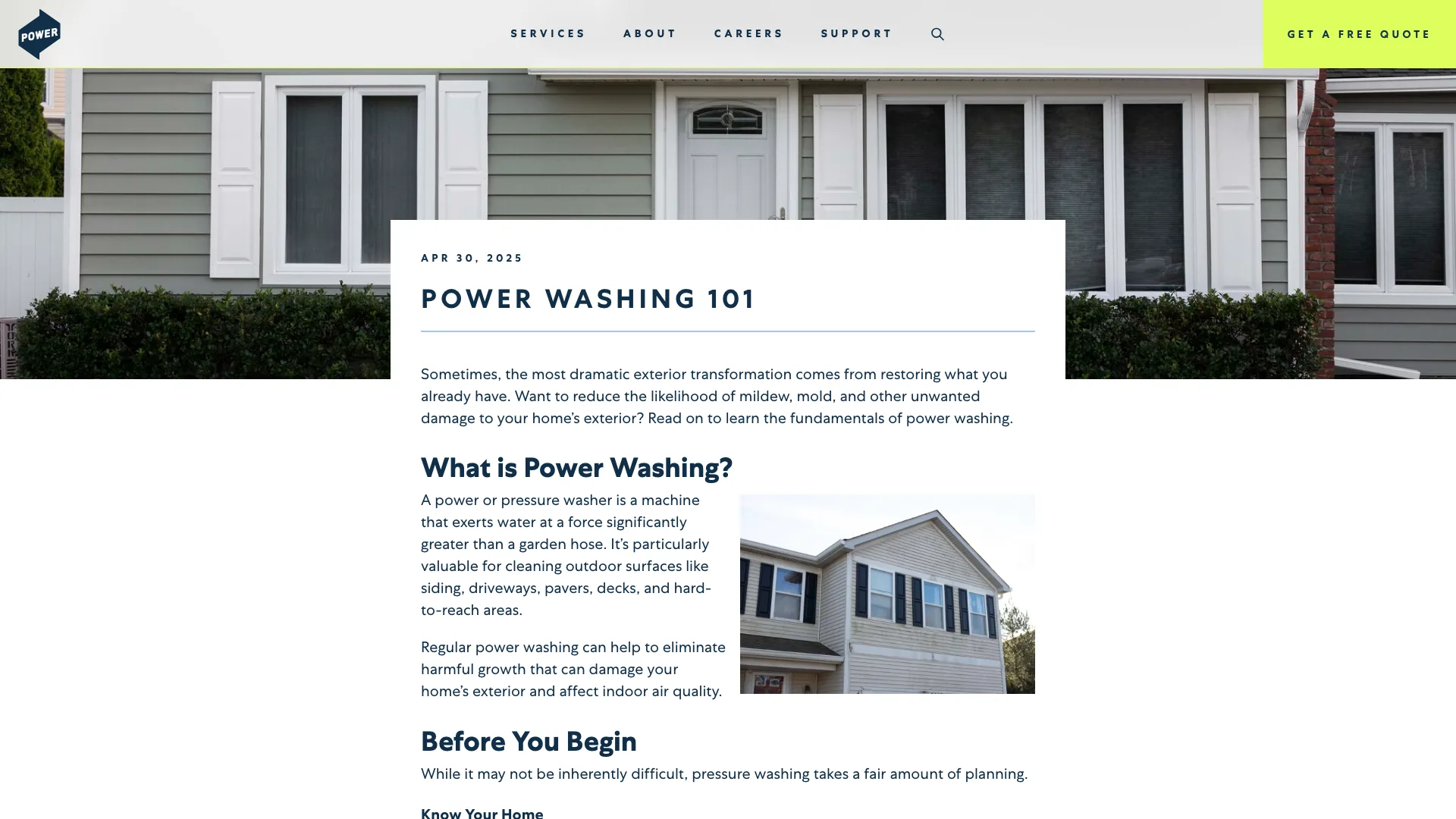
Power Washing 101 earns roughly 1,700 monthly visitors. Home Styles Explained earns approximately 1,100. These aren't vanity traffic numbers. Homeowners reading a power washing guide or researching their home's architectural style have, by definition, already decided to engage with the category. They're not indecisive about whether home maintenance is on their radar. They're sitting on a weekend morning, coffee in hand, researching.
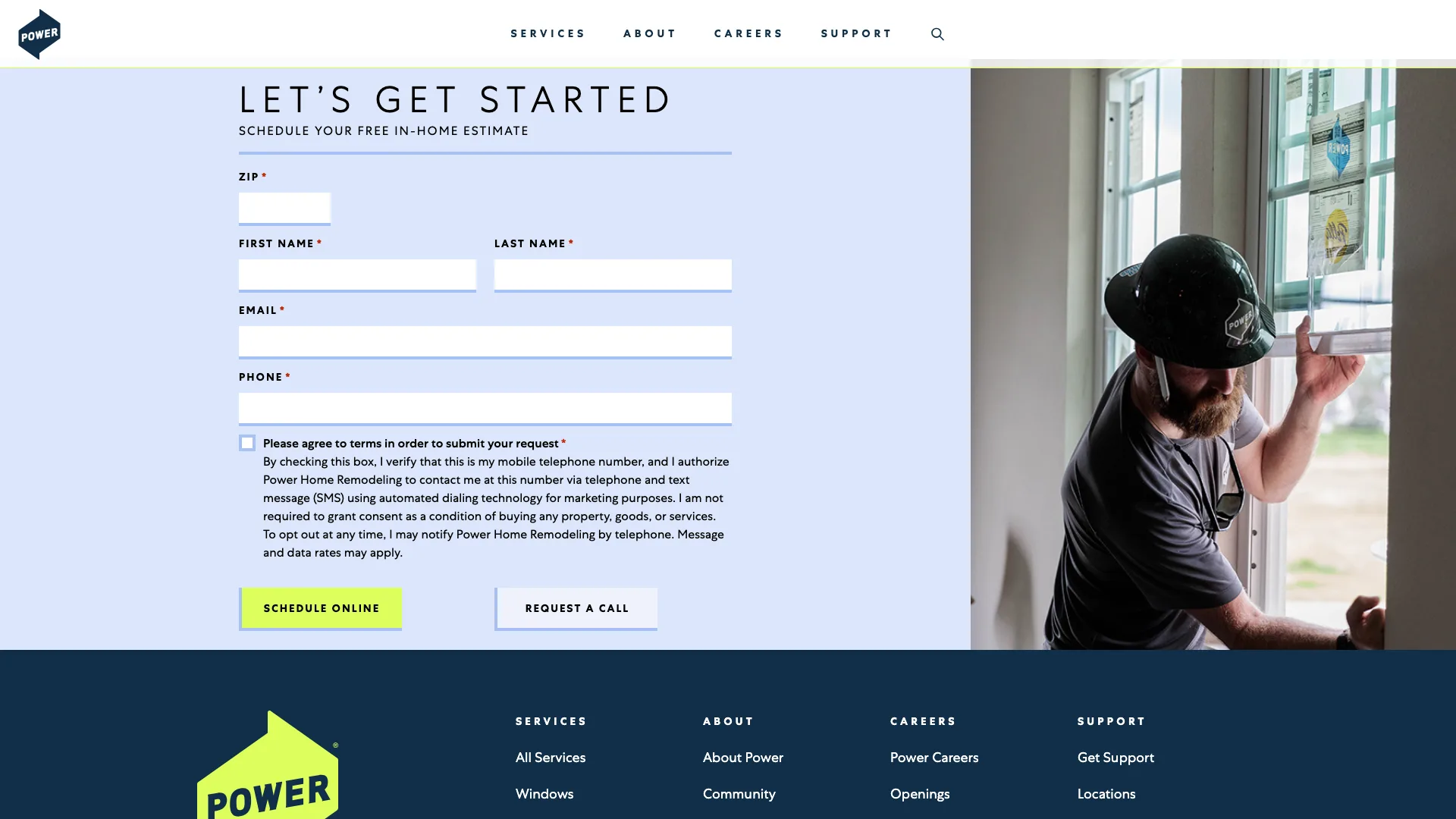
Both articles dead-end at the bottom. Two generic related-article links. One sentence pointing toward Power HRG's services. No form. No ZIP code field. No contextual inline CTA matched to what the reader just learned.
So Power HRG's content strategy earns warm traffic and then has no mechanism to convert it. The editorial quality is above industry average for contractor blogs. The problem is what comes after the reader reaches the bottom of the page.
Here's the structural explanation for why this happens, and it's worth sitting with. The paid team has CPA data. Every ad dollar that goes out comes back with a number attached. The content team has page views. Page views don't have a dollar sign next to them unless there's a capture mechanism that closes the loop. What doesn't get measured doesn't get fixed. The organic blog traffic at Power HRG produces near-zero attributed conversions, and the traffic is warm. There's just no mechanism to attribute it.
That's a measurement problem. Creative and budget aren't the issue here.
Comparison
"90% of homeowners renovating in 2024 hired professional help. 49% hired specialty service providers (up from 46% in 2022)."
— Houzz Inc. (2025)
Think about who that Power Washing 101 visitor is. They're already someone who hires professionals for home projects at 9-in-10 odds. They've already moved past the DIY-vs-pro question on nearly every renovation they consider. And Power HRG published the exact piece of content that catches them in research mode, then removed every on-ramp that would turn that research into a lead.
Side by side: what the data shows
This table is built entirely from publicly observable data. Google Ads Transparency Center for the paid side. Ahrefs third-party traffic estimates for the organic side. Observable page elements for the conversion mechanism column. Nothing in this audit requires access to Power HRG's internal analytics.
The windows service page is where the paid and organic stories collide
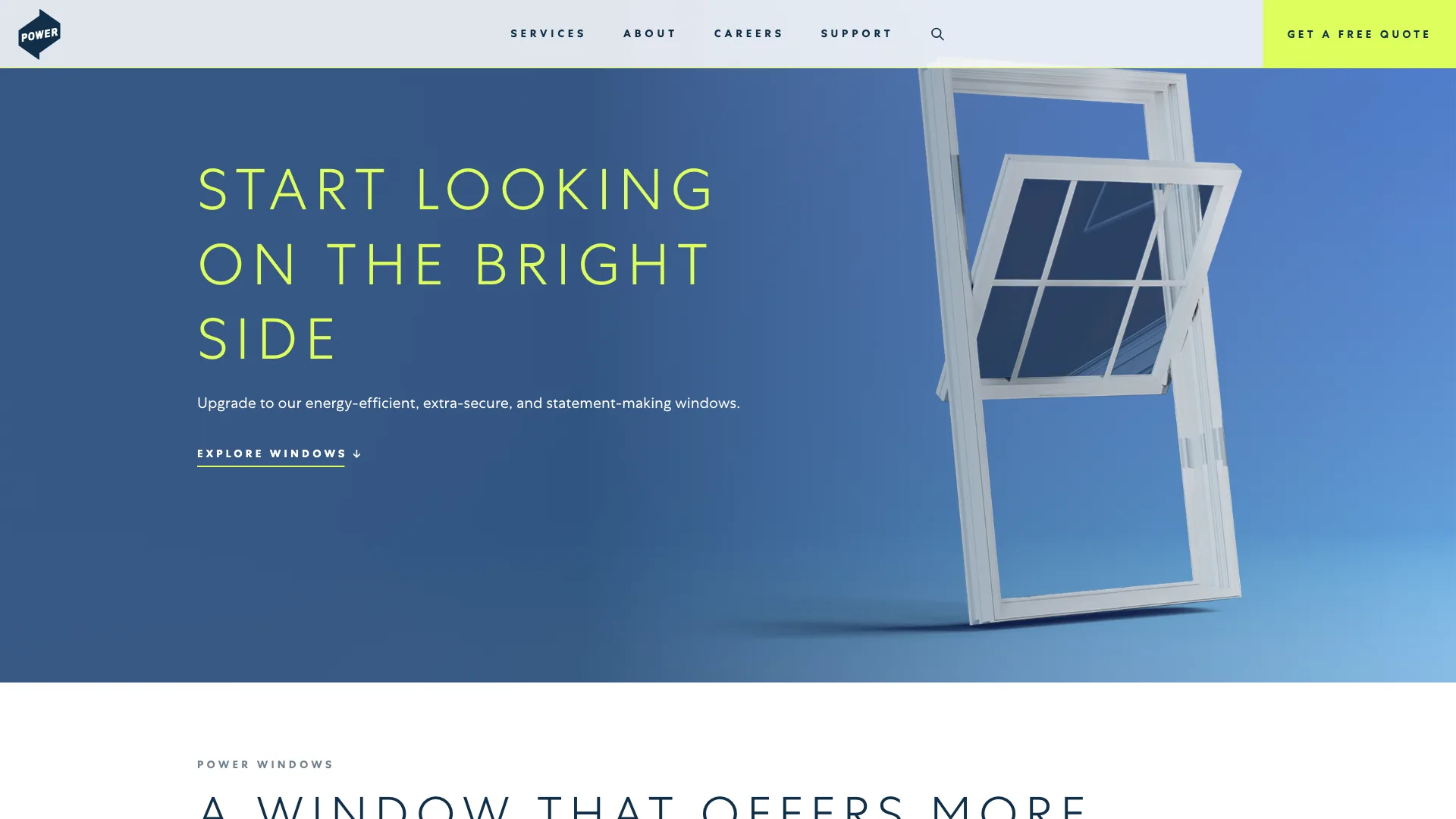
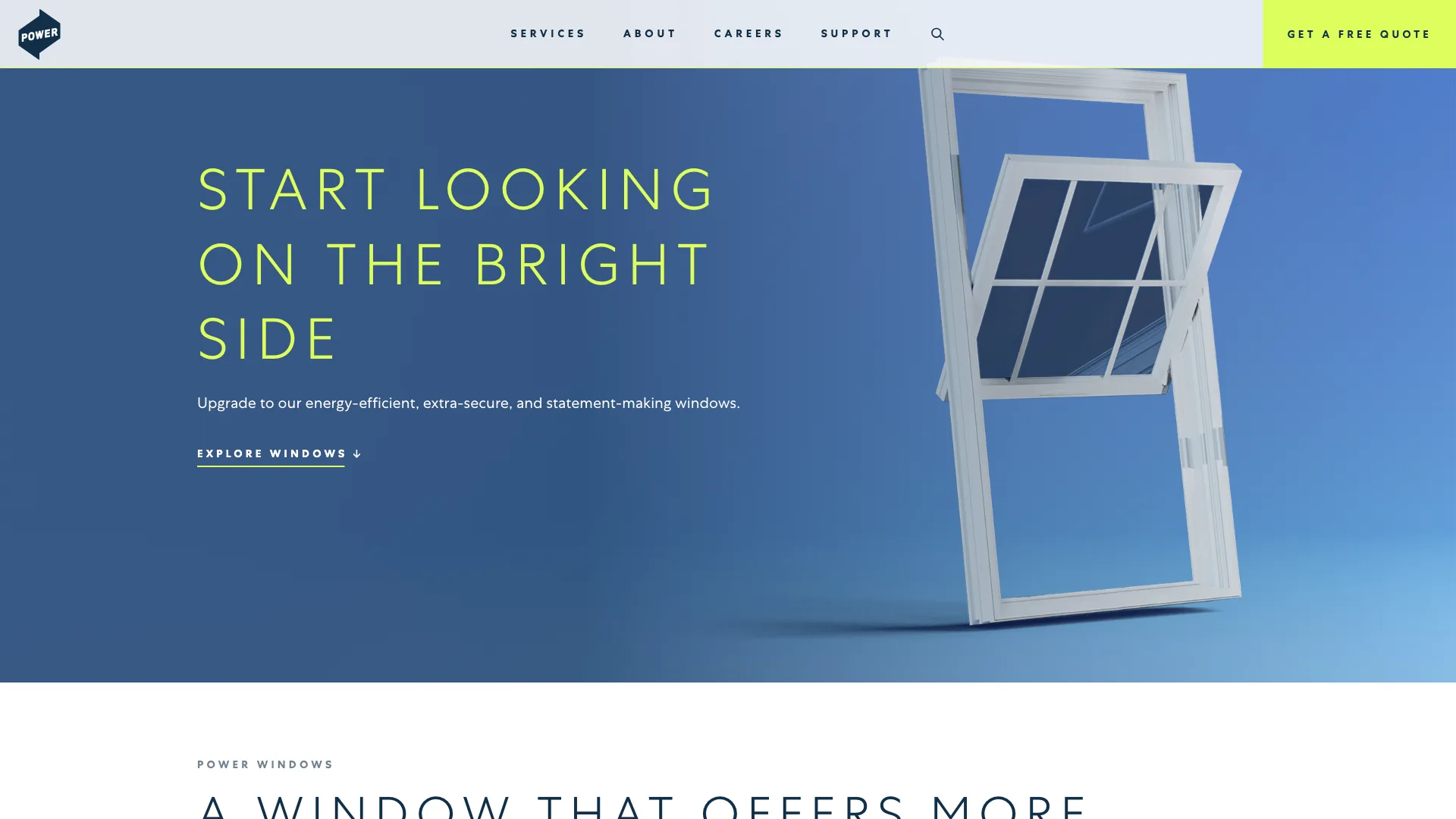
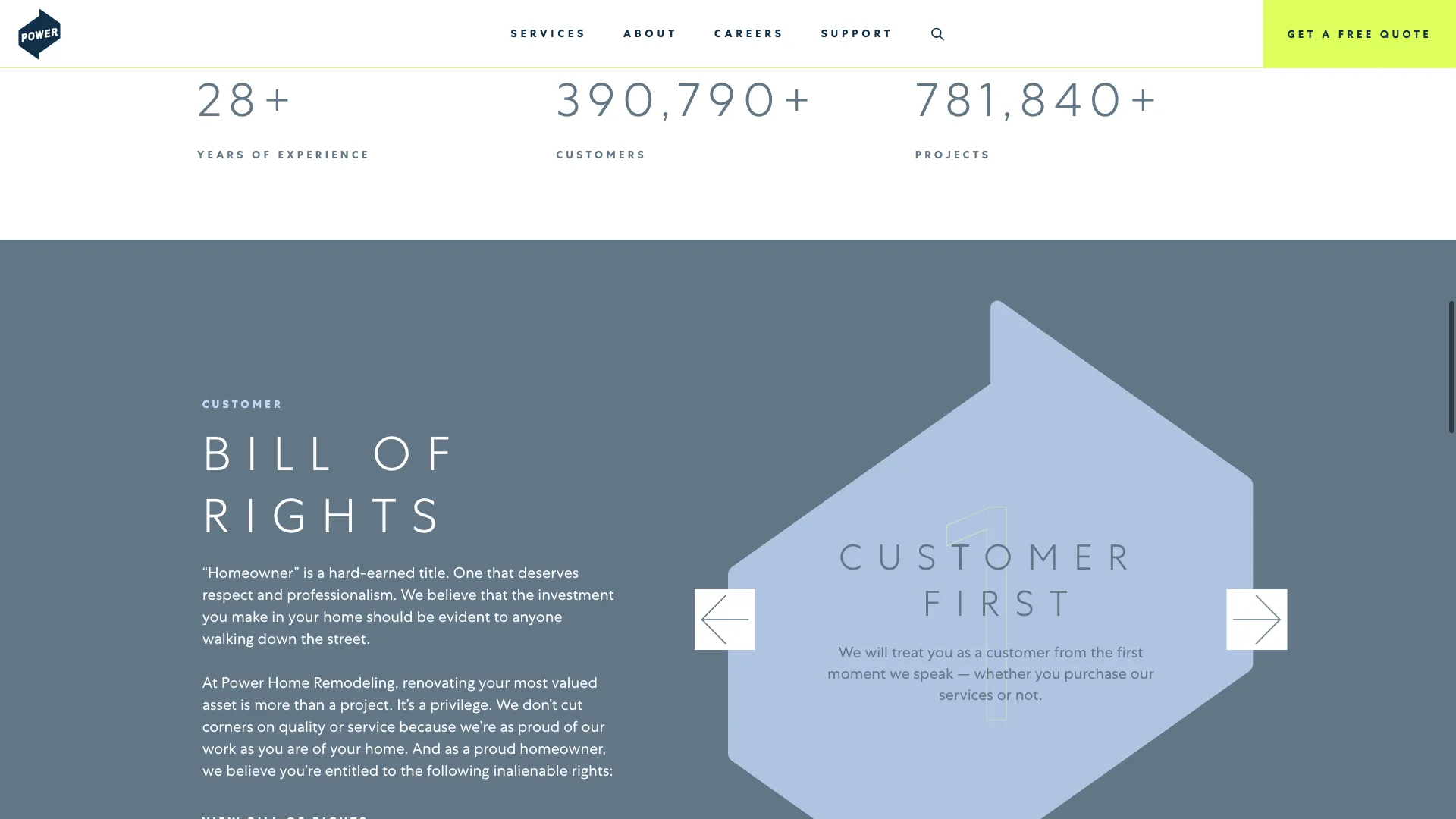
A significant portion of Power HRG's Google Ads send traffic to the Windows service page, based on ad creative references to window products. That page scores 66 out of 100 on the Fervor Grade.
The product benefits are presented through expand-to-reveal toggle sections. So a homeowner who hasn't decided yet whether to replace their windows has to click through a stack of toggles to see what Power HRG's windows offer. There are no windows-specific testimonials. There's no on-page quote form. The only conversion path is the global navigation CTA bar, which is the same call-to-action a visitor sees on the homepage, the blog posts, the About page, and every other page on the site.
"More than 2 in 5 renovating homeowners (42%) add or upgrade windows or skylights as part of exterior-related projects."
— Houzz Inc. (2024)
These aren't one-project buyers. More than two in five renovating homeowners adding exterior work are already spending on windows as part of the scope. They're evaluating who to trust with a window job alongside a roof, a siding pass, or a door replacement. A service page that hides product details behind toggles and offers no on-page form creates friction at the exact moment a buyer has moved from research to decision.
The organic side compounds this. Power HRG's Home Styles Explained article specifically notes that Victorian homes feature ornate trim and oversized windows. Power HRG sells windows. An inline content block connecting those two facts would complete the editorial logic the article sets up. Instead, the article ends. A homeowner who just learned their Victorian home has a specific window profile gets nothing from the brand that's spent 30 years specializing in exactly that project type.
"Users often leave web pages in 10-20 seconds. The first 10 seconds are critical — the probability of leaving is highest because users are extremely skeptical. If users stay past 30 seconds, they'll often stay 2 minutes or more."
— Nielsen Norman Group (2018)
The 10-second rule cuts both directions. It's why the homepage has a visible ZIP gate above the fold. And it's why the windows page shouldn't be making a buyer hunt through toggle sections for product specs before showing them a way to request a quote. A buyer at decision stage doesn't come back tomorrow. They call the next contractor in the SERP.
What this means if you have a tenth of the budget
You can't outspend Power Home Remodeling on Google Ads. They've been running 400 simultaneous campaigns long enough to build the attribution infrastructure, the creative library, and the bid management process to do it profitably. That's a gap that takes years and significant capital to close.
You can outmeasure them on organic conversion. A local window installer or siding contractor with 300 monthly visitors to a single blog post, a contextual mid-article form, and a service page with an on-page quote form is capturing leads that Power HRG's content is currently generating and releasing. Every week. Into the void.
For any exterior contractor weighing paid and organic marketing decisions, this is the clearest lesson the Power HRG audit offers. The channel with attribution gets the investment and the optimization. The channel without attribution gets ignored. The real conversion gap stays open.
"In 2026 renovation planning, 63% of homeowners anticipate challenges related to rising product and material costs."
— Houzz Inc. (2025)
And that's not a small opportunity. 63% of homeowners planning renovations are bracing for rising material costs, which means they're spending more time in the research phase before signing anything. That research phase happens on blog content. It happens on service pages where homeowners try to understand what they're actually buying. If your site is where they land during that phase and you don't have a capture mechanism, you're doing the research work for whoever they call next.
Comparison
"96% of consumers read online business reviews at least occasionally; 74% use two or more review platforms when researching."
— BrightLocal (2025)
The homeowner who finds your power washing guide, reads it, and sees a "not sure if power washing is enough for your siding? Get a free exterior assessment" panel is at the highest-intent moment in their decision cycle. Before they've called anyone else. And you're the only contractor who showed up in that moment with both useful information and a way to take the next step.
Three questions every contractor should answer before comparing Google Ads and organic traffic
The debate over contractor website conversion before running ads almost always centers on the wrong variable. Contractors typically ask: "How much should I spend on ads?" The question the Power HRG audit suggests asking first is: "Am I capturing what my organic pages already earn?"
The Fervor Grade methodology flags this consistently. Contractors who move to paid traffic before their organic infrastructure is converting are paying to acquire leads from a channel that has attribution while releasing leads from a channel that doesn't. So the paid channel gets the credit. The organic channel gets ignored. The conversion problem stays unsolved.
Three questions worth answering first:
Is every organic page earning more than 100 monthly visitors capturing leads? A blog post without a form is a brand impression, not a lead-generating asset. Brand impressions have value. They just don't fill a sales pipeline.
Do your service pages have on-page forms, or only a navigation-bar CTA? A global header button works for visitors who've already decided to contact you. It doesn't convert the ones who haven't. Service pages need forms in the page itself, at the point where a visitor's question has been answered and the next step is obvious.
Is your blog content connected to your service pages with contextual inline links? If your seasonal roofing maintenance post doesn't link directly to your roofing inspection service page with an editorial reason to click, you wrote content that benefits your SEO but not your lead pipeline.
Comparison
"57% of page-viewing time is spent above the fold. 74% of viewing time is spent in the first two screenfuls."
— Nielsen Norman Group (2024)
And the NNG data above explains why these three questions matter more than the ad-budget question. More than half of a visitor's attention is spent on what you show them first. If what you show them first doesn't include a form or a clear next step, you're spending that attention on brand impression and saving the conversion ask for a place most readers will never reach.
Answer those three questions first. If any of them is no, the ad budget is solving the wrong problem.
The transferable lesson
Power Home Remodeling's paid advertising infrastructure is real, well-built, and actively optimized. That's not the issue this audit documents. The paid/organic paradox at Power HRG isn't a strategic mistake unique to a national brand running a complex franchise operation. It shows up on local contractor sites with 12 pages and a $500 monthly ad spend. The dynamic is identical. Money goes to the channel with clear attribution. Organic infrastructure stays broken because no one measures it.
Spending
"The median spend on roofing upgrades in 2024 was 8% higher than in 2023 (median $13,000 in 2024)."
— Houzz Inc. (2025)
Power HRG's organic content is strong enough to rank and earn 2,800 warm visits per month to two articles. The brand paid for the creative, the publishing, the SEO work, and the 30 years of authority that helps those pages rank. It captures approximately none of that value in the form of leads, because the measurement gap between paid and organic means no one's CPA report shows it as a problem.
Local contractors don't have that measurement gap as an excuse. You probably know how many leads came in last month. You probably don't know how many homeowners read your last blog post and left. Both of those are worth knowing.
If your site is running paid traffic before your organic pages are capturing what they earn, the conversation starts with an audit. A look at your five highest-traffic organic pages, your service pages, and whether the infrastructure connecting them closes the loop. No sales deck required, no six-week engagement. It starts with the pages that are already earning traffic.
Frequently asked questions
What is the paid/organic paradox this audit identifies?
Power Home Remodeling runs roughly 400 Google Ads and has full attribution on every dollar spent. Their organic content pulls around 2,800 monthly readers across two blog posts and captures almost none of them. The paradox isn't bad marketing. It's structural. The channel with attribution (paid) gets investment and optimization. The channel without attribution (organic) gets ignored. What gets measured gets fixed. What doesn't get measured stays broken, even when the traffic is already warm.
Why is Power Home Remodeling running 400 Google Ads?
Because cost-per-acquisition is measurable. Every ad dollar comes back with a number attached. Power HRG has built the infrastructure (campaign architecture, creative production, bid management, ongoing performance analysis) to run that many campaigns profitably. The creative is brand-consistent and sharp: "Exteriors Made Epic," "Tear the Roof Off Your Expectations," "Home Run." This is deliberate conversion thinking, documented in the Google Ads Transparency Center at adstransparency.google.com.
How much organic traffic does Power HRG leave uncaptured?
Power Washing 101 earns roughly 1,700 monthly visitors. Home Styles Explained earns approximately 1,100. Both articles dead-end with two generic related-article links and one sentence pointing toward Power HRG's services. No form. No ZIP code field. No contextual inline CTA. That's around 2,800 warm readers per month finishing the article and leaving without being asked for contact information, on content the brand paid to create and has 30 years of domain authority helping to rank.
What should a local contractor do with a tenth of Power HRG's ad budget?
You can't outspend a national brand that's been running 400 simultaneous campaigns for years. You can outmeasure them on organic conversion. Three moves. Put an on-page form on every service page so homeowners don't have to click twice to convert. Add a contextual inline CTA block mid-article on every blog post that earns more than 100 monthly visitors. Run your top-20 Ahrefs pages against the live site to catch silent redirects that leak traffic without triggering a 404 signal.
